You're balancing project budgets and quality, but pricing for stone and quartz seems inconsistent. Making the wrong choice can strain your finances or lead to client dissatisfaction. I will clarify it.
It depends. Quartz is often priced similarly to mid-range natural stones like marble but can be more expensive than budget-friendly granite. The final cost is determined by the specific type of stone, design complexity, and quality, not just the material category.
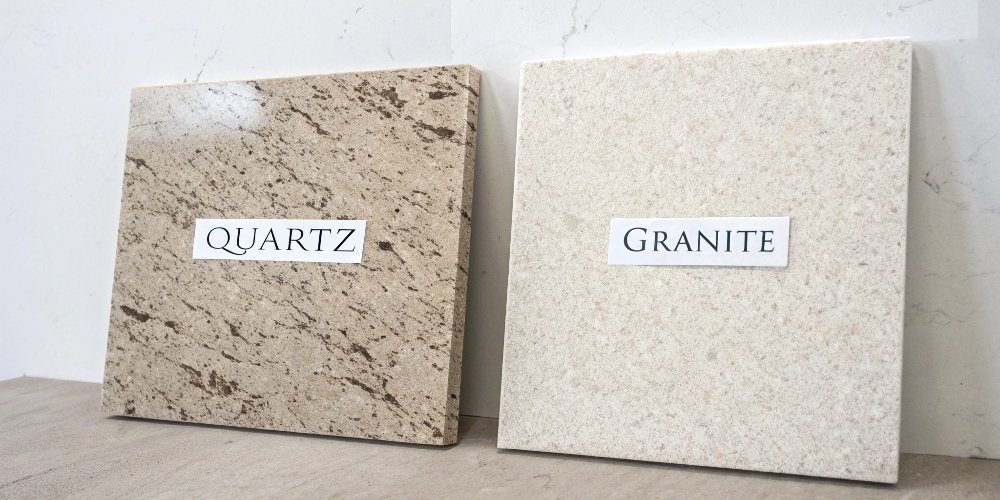
That is a question I hear all the time from procurement managers and project developers. There is no simple "yes" or "no" answer. The price tags can be confusing. The final project cost involves more than just the price per square foot. I've worked on countless projects where these materials were compared. It always comes down to the specific needs of the job and the total cost of ownership. Let's break down the details so you can make confident decisions for your projects.
What is the downside to quartz countertops?
You know that no material is perfect for every application. You need to understand the potential drawbacks of quartz to avoid future issues. I'll point out the real limitations.
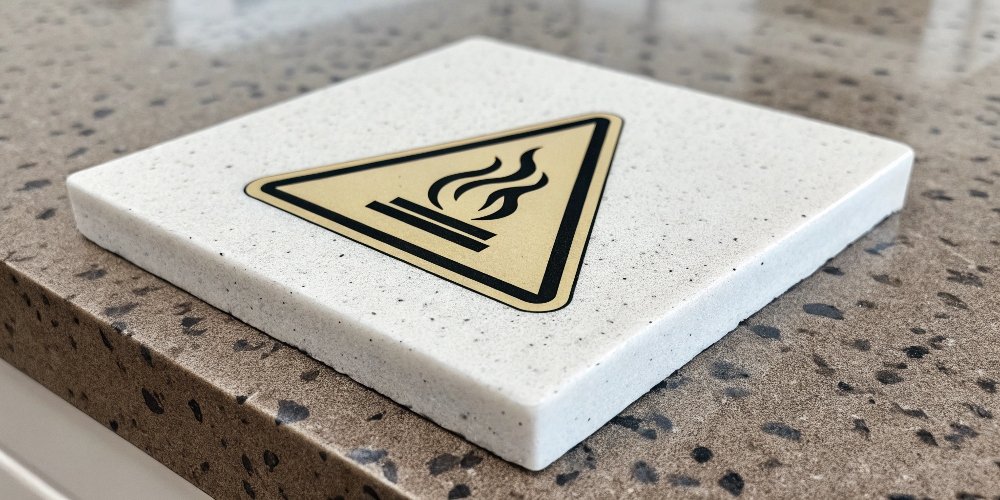
The main downsides of quartz are its lower heat resistance compared to stones like granite and its uniform appearance, which some clients may find less unique. Direct contact with very hot pans can damage the resin binders in the slab.
While quartz is incredibly durable, it has its limits. As a procurement manager, you need to be aware of these to manage expectations with your project teams and end-users. It's about fitting the right product to the right environment.
Limited Heat Tolerance
The resins used to bind the quartz crystals together are the material's weak point when it comes to heat. Placing a hot pot directly from the stove onto a quartz surface can cause thermal shock, resulting in discoloration or even cracking. This is probably the biggest practical difference compared to granite. Users must always use trivets or heating pads.
Uniformity Can Be a Con
For many commercial projects, the consistency of quartz is a major advantage. However, for some high-end residential clients who desire a one-of-a-kind, "natural art" look, the predictable pattern of quartz can be seen as a negative. They might prefer the unique, unrepeatable veining that every slab of natural marble offers. It is really a matter of aesthetic preference.
What is the best countertop for your money?
You are always searching for the best value, not just the lowest price. The best countertop is one that meets your project's demands without causing long-term headaches. I'll explain my view on value.
The best countertop for your money is the one that balances upfront cost with long-term performance and low maintenance. For many projects, quartz offers the best overall value due to its durability, consistency, and a total cost of ownership that is often lower than natural stone.
Finding the "best value" requires looking beyond the initial material invoice. You have to consider fabrication waste, installation ease, and long-term maintenance costs. These factors are critical for your bottom line.
Calculating Total Cost of Ownership
Natural stones like granite and marble often require regular sealing to prevent stains. This is an ongoing maintenance cost in both labor and materials. Quartz is non-porous and never needs sealing. Over the life of a project, this can add up to significant savings. I had an Australian client who chose our high-end quartz over marble for a showroom project. The initial price was similar, but he knew the quartz would look perfect for years with zero maintenance, which was the better long-term value for him.
Value in Predictability
For large commercial or multi-unit residential projects, consistency is value. With quartz, you can be sure that the 100th slab will look just like the first. This minimizes waste during fabrication and ensures a uniform look across the entire project. Natural stone can have significant variations, which can lead to higher waste factors and budget overruns.
Which is better, quartz or stone countertops?
The choice between quartz and natural stone can be a major decision point. You need to know which material will perform best for your specific project. Let me simplify the comparison.
Neither is universally "better." Quartz is better for consistency, low maintenance, and design flexibility. Natural stone is better for unique, one-of-a-kind aesthetics and superior heat resistance. The best choice depends entirely on your project's priorities.
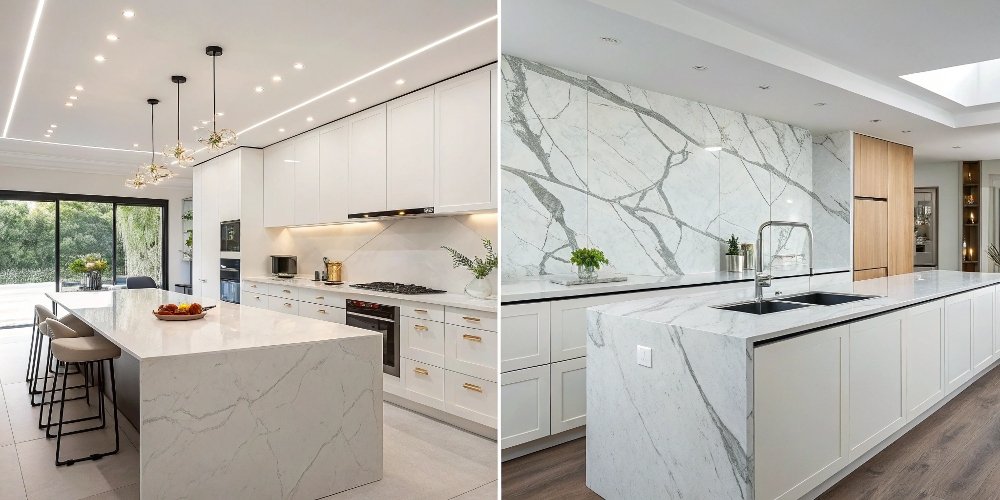
This is the core of the debate. Instead of asking which is better, you should ask which is more suitable for your specific application. Both are excellent materials, but they excel in different areas.
For Performance and Practicality
If your top priorities are durability, stain resistance, and zero maintenance, quartz is almost always the superior choice. Its non-porous surface is perfect for busy kitchens, bathrooms, and commercial spaces. Its predictable structure also makes fabrication easier for your teams, reducing the risk of breakage during cutting compared to natural stone that might have hidden fissures.
For Natural and Unique Beauty
If the project's goal is to create a statement with a unique, natural piece, then nothing beats stone. Each slab of marble or granite is completely unique, a piece of art created by the earth. This is a powerful selling point for luxury projects where exclusivity is key. For example, a client looking for a dramatic, flowing vein that runs across a large island will only find that in natural stone.
How much is a 10 ft slab of quartz?
You need to estimate costs for bids, but getting a single price for quartz is difficult. The price range is wide and can be confusing. I'll explain what drives the cost.
A 10-foot quartz slab has no single price. It can range from a few hundred to several thousand dollars. The cost depends heavily on the brand, design complexity, thickness, and where it is made. Basic designs are much more affordable than complex marble-look patterns.
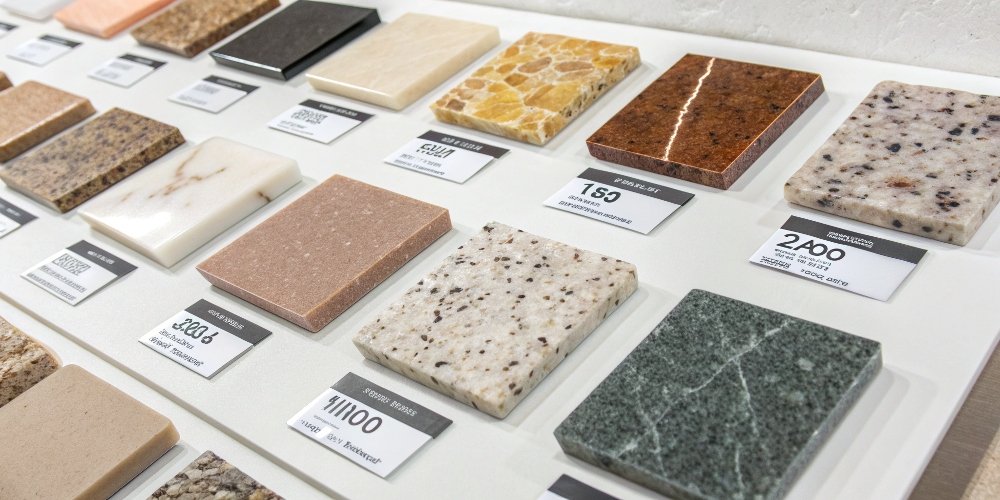
I know this is a frustrating answer, but it's the reality of the market. The price is based on much more than just the size. Think of it like buying a car; a basic model and a luxury model of the same size have vastly different prices.
The Impact of Design and Raw Materials
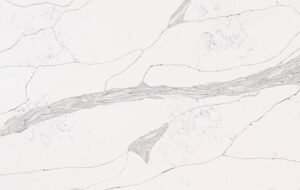
A simple, solid-color quartz slab uses common pigments and a straightforward manufacturing process, making it more affordable. A slab that perfectly imitates Calacatta marble, with intricate veining and translucent depth, requires premium-quality white quartz sand, advanced machinery, and a much more complex production process. This drives the price up significantly. The cost of the raw materials and the technology used are the biggest factors.
Breaking Down the Costs
Remember that the slab price is only one part of your final cost. As a procurement manager, you already track this, but it is worth repeating. Here is a simplified look at what goes into the total project cost:
| Cost Component | Description | Impact on Price |
|---|---|---|
| Slab Material | The cost of the quartz slab itself. | Varies by design, brand, and quality. |
| Fabrication | Cutting, polishing, and creating edge profiles. | Higher for complex designs or more cutouts. |
| Logistics | Ocean freight, inland transport, and warehouse fees. | Can be a significant portion of the cost. |
| Installation | The labor cost to install the final countertop. | Varies by region and project complexity. |
Conclusion
The price difference between quartz and natural stone is not simple. The best choice depends on project needs, balancing upfront cost with long-term value, maintenance, and the desired aesthetic.