Struggling to choose between quartz and granite? You want a durable countertop, but the information is conflicting. I will help you pick the right material for your project's needs.
In my experience, quartz is more durable for everyday use because it resists scratches, stains, and chips better. Granite, however, handles high heat much better. The best choice depends on how you will use the surface and what level of maintenance you are comfortable with.
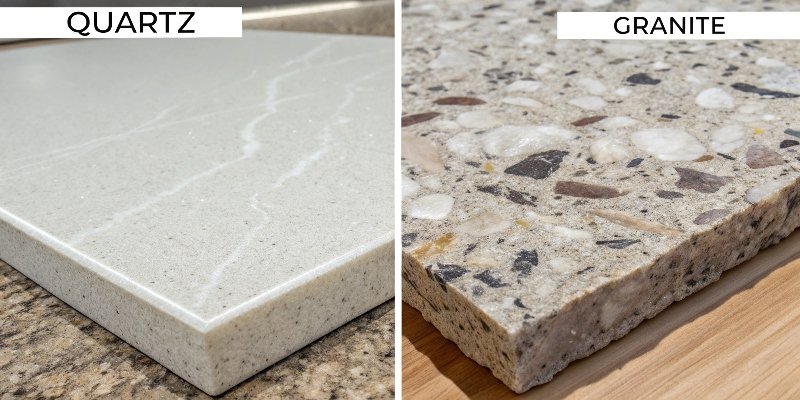
Choosing the right countertop material is a big decision for any project. Both quartz and granite are excellent choices, but their durability differs in important ways. Understanding these differences is key to making a smart investment that lasts for years. Let's break down the details so you can see which one truly fits your project's demands.
Does quartz last longer than granite?
Worried your countertop won't stand the test of time? You invest in a new surface, hoping it will last for decades. Let's see which material offers superior longevity.
Both quartz and granite can last 20 to 30 years or even longer with proper care. Quartz often has an edge in longevity for indoor use due to its non-porous nature. Granite's lifespan depends heavily on regular sealing to prevent staining and damage.
In my 13 years in this industry, I have seen both materials perform for decades. The real difference in longevity comes down to the environment and maintenance. Quartz is an engineered product. Its non-porous surface protects it from liquids, food acids, and bacteria, which can degrade other materials over time. This makes it a "set it and forget it" option for busy clients. Granite, while incredibly hard, has natural fissures and is porous. If the sealant wears off, spills can seep in and cause permanent stains. For outdoor applications, however, granite is the clear winner. Its natural composition stands up to UV rays without fading. The resin in quartz can yellow over time with prolonged sun exposure. So, for a busy indoor kitchen, quartz might "last longer" in terms of pristine appearance. For an outdoor kitchen, granite is the better long-term choice.
Factors Influencing Longevity
| Feature | Quartz | Granite |
|---|---|---|
| Indoor Lifespan | 25+ years | 25+ years (with sealing) |
| Maintenance | None needed | Annual sealing recommended |
| Stain Resistance | High | Moderate (depends on seal) |
| UV Resistance | Low (Not for outdoor use) | High (Excellent for outdoor use) |
Which is the most durable, quartz or granite?
Afraid of chips and scratches on your new countertop? You want a surface that can handle daily life without showing wear. Here is the most durable choice for you.
For overall daily durability, quartz is the winner. Its engineered composition includes polymer resins, making it more flexible and resistant to impact than granite. This means it's less likely to chip or crack if you accidentally drop a heavy pot on it. Granite is harder, but also more brittle.
Procurement managers often ask me to define "durable." Durability isn't just one thing; it's a mix of hardness, impact resistance, and scratch resistance. On the Mohs hardness scale, granite is about a 6 to 7. Engineered quartz is also around a 7. This means both are highly resistant to scratches from everyday items like knives and keys. The real difference is in impact resistance. The resins in quartz act as a binder, giving the material a bit of flexibility. Granite is a solid piece of natural stone, so it is more rigid and brittle. A heavy impact, like a dropped cast-iron pan, is more likely to cause a chip or a serious crack in granite. I have had clients tell me they were so relieved they had chosen quartz after an accident in the kitchen. It is that extra forgiveness from the resin that makes quartz a more practical and durable choice for a high-traffic kitchen.
A Breakdown of Toughness
| Durability Metric | Quartz (Engineered) | Granite (Natural Stone) |
|---|---|---|
| Hardness (Mohs) | ~7 | 6-7 |
| Impact Resistance | High (More Flexible) | Moderate (More Brittle) |
| Scratch Resistance | High | High |
| Chip Resistance | High | Moderate |
What is the lifespan of quartz vs granite?
Confused about long-term value? You need a surface that not only looks good now but will also last for decades. Let me clarify the expected lifespans for you.
Both quartz and granite offer an excellent lifespan, often exceeding 25 years. The key difference lies in the maintenance required to achieve that lifespan. Quartz is virtually maintenance-free. Granite's longevity depends on consistent sealing to protect its porous surface.
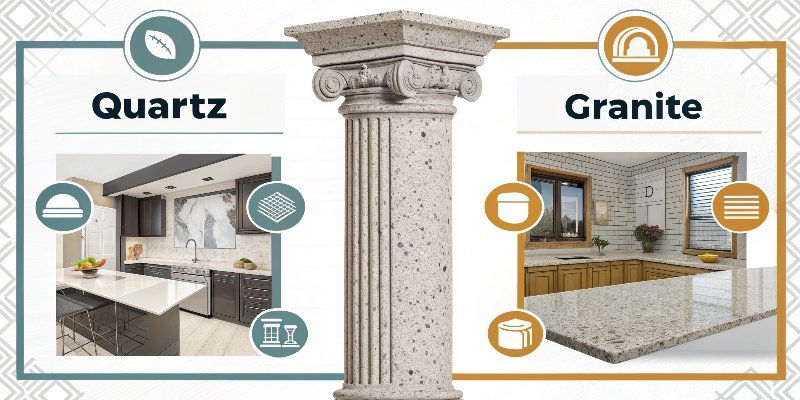
When we talk about lifespan, it is important to consider the total cost of ownership over that time. A quartz countertop has a very predictable lifespan. You install it, and with basic cleaning, it will look fantastic for decades. The material is non-porous, so you do not have to worry about long-term damage from spills. Granite's lifespan is a bit more variable. If a client is diligent about sealing it every year or two, it can also last a lifetime. But if they forget, a single red wine or oil spill on unsealed granite can become a permanent stain. Over a 25-year period, the cost and effort of sealing add up. For commercial projects or busy households, my clients often prefer quartz because it removes that maintenance requirement. This ensures a consistent appearance and reliable performance throughout its long life, making it a better long-term value for many.
Lifespan and Lifetime Cost
| Factor over 25 Years | Quartz | Granite |
|---|---|---|
| Initial Cost | Competitive | Competitive |
| Maintenance Cost | ~$0 | $250 - $500+ (sealing materials/labor) |
| Risk of Staining | Very Low | Moderate to High (if not sealed) |
| Appearance Consistency | High | Can change if stained or damaged |
What is the downside of quartz countertops?
Think quartz is perfect? Every material has its limits, and knowing them can save you from costly mistakes. I will explain the main weakness of quartz countertops for you.
The biggest downside of quartz is its lower heat resistance compared to granite. The resin binders that make quartz so durable can be damaged by temperatures above 185°F (85°C). Always use trivets for hot pots and pans to avoid damage.

I always believe in being transparent with clients about a product's limitations. For quartz, the main one is heat. The resins that bind the quartz crystals together make up about 7-10% of the slab. These resins provide amazing durability against impacts and stains, but they are sensitive to high temperatures. Placing a hot pan directly from the stove onto a quartz surface can cause thermal shock. This can lead to permanent discoloration or even cracks. Granite, on the other hand, is a 100% natural stone forged by heat and pressure inside the earth. It can handle temperatures up to 1200°F (650°C) without any problem. Another consideration is outdoor use. The resins in quartz are not UV stable. This means direct, prolonged sunlight can cause the colors to fade or the surface to yellow. This is why I always recommend granite for outdoor kitchens, while quartz remains my top recommendation for almost all indoor applications.
Understanding Quartz's Limitations
| Limitation | Quartz | Granite |
|---|---|---|
| Heat Resistance | Low (up to ~185°F / 85°C) | Very High (up to ~1200°F / 650°C) |
| Outdoor Suitability | Not Recommended | Excellent |
| Source | Engineered (Consistent patterns) | Natural (Unique patterns) |
| Maintenance | Requires trivets for hot items | Resistant to direct heat |
Conclusion
To summarize, quartz offers superior daily durability and low maintenance for indoor use, while granite provides unmatched heat resistance and is better suited for outdoor applications.